

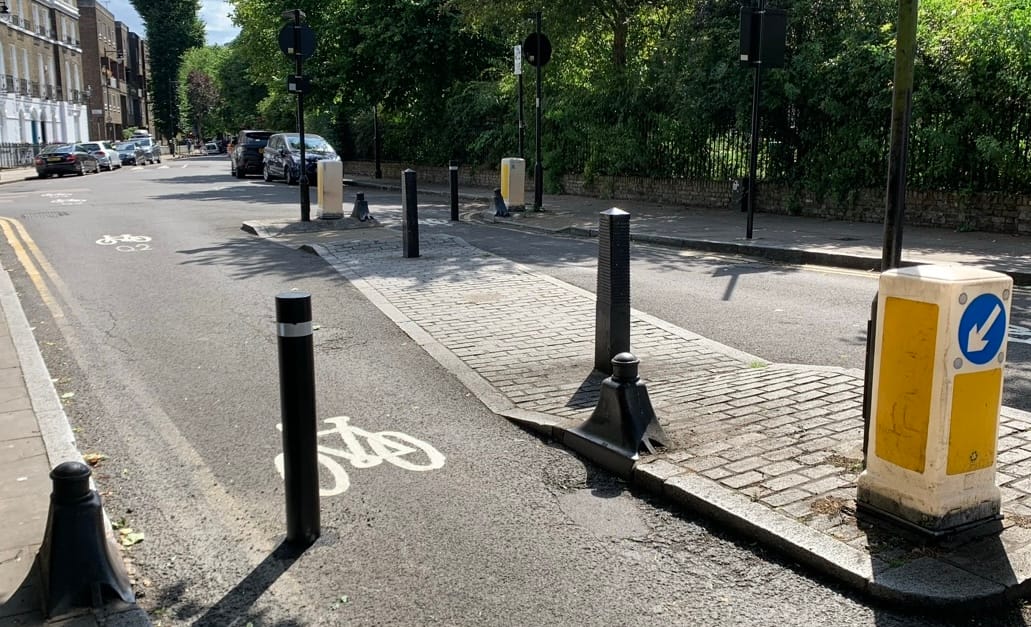
Many Barnsbury and Laycock residents will have heard about plans for a Liveable Neighbourhood scheme in our area. Similar schemes – often known as Low-Traffic Neighbourhoods (LTNs) – have been introduced across London over the last few years. They aim to reduce through traffic on residential streets using measures such as planters, bollards, and camera-controlled filters, while still allowing access for residents, deliveries, emergency services, and people with mobility needs.
Over the past few years, a growing body of research has examined what actually happens when LTNs are introduced. Recent UK studies, including several published in 2024 and 2025, help provide a clearer picture of their real-world effects.
Safer streets
One of the strongest findings relates to road safety. A major 2025 study examining 113 LTNs across London over more than a decade found that road traffic injuries fell by around 35% within LTN areas, with an even greater reduction in serious and fatal injuries.
Crucially, the study found no increase in casualties on surrounding main roads, addressing a common concern that danger is simply displaced elsewhere. Overall, the researchers estimated that LTNs prevented more than 600 injuries across London during the study period.
Earlier evaluations in places such as Waltham Forest and Oxford show similar results, with some neighbourhoods seeing injury numbers fall by close to half once through traffic was removed from residential streets.
Walking, cycling, and everyday travel
Studies also show changes in how people travel locally. Research comparing LTN areas with similar neighbourhoods found that residents inside LTNs tend to walk and cycle more and drive less.
One London study found that people living in LTNs reduced the distance they drove by around 6% more than those living outside them. While not everyone changes their habits, it seems that quieter streets make short local journeys feel safer and more appealing on foot or by bike.
Cleaner air and quieter streets
Reducing traffic on residential roads can help improve local air quality, an important issue in inner-London boroughs such as Islington. A recent study in Birmingham found reductions in air pollution alongside increased walking and cycling. A separate evaluation of LTNs in Islington reported falls in nitrogen dioxide (NO₂) levels within LTN areas, without increases on nearby boundary roads.
Traffic reduction also leads to lower noise levels. Research measuring sound before and after LTNs found that noise generally fell, with residents reporting calmer, more pleasant street environments.
Community life and neighbourhood feel
Beyond statistics, LTNs can influence how streets are used. With fewer cars passing through, streets can feel safer and more sociable, especially for children, older residents, and anyone who finds traffic intimidating. Research also recognises that views vary and that good design, monitoring, and community engagement are key to making schemes work well.
Myths & Facts
Myth: LTNs just push traffic and danger onto other roads.
Fact: Large London studies found no increase in injuries on surrounding main roads and minimal impact on traffic on boundary roads.
Myth: Residents can’t get in or out of their streets.
Fact: LTNs allow vehicle access for residents, deliveries, and emergency services; what they prevent is through-traffic.
Myth: LTNs don’t improve air quality.
Fact: Studies in London and other UK cities show reduced pollution within LTN areas without worsening air quality nearby.
Myth: LTNs only benefit cyclists.
Fact: Evidence shows benefits for pedestrians, children, older people, and anyone who wants quieter, safer, less-polluted streets.
Looking ahead
As plans for a Liveable Neighbourhood in Barnsbury develop, experience from elsewhere suggests that outcomes depend not just on the idea itself, but on how carefully it is implemented and reviewed. The growing UK evidence base indicates that, when done well, reducing through-traffic can help make neighbourhoods safer, healthier, and more pleasant places to live.